01 Leadership
You decide, or they vote
A thief, a bite, a stranger at the gate: each call is yours or the group's. Deciding builds Authority; a vote builds Trust, and you live with the result. People remember who overruled them.
Now open · A survival leadership game
You find an abandoned camp and a handful of strangers. You agree the rules around the fire, send people out on routes you drew yourself, and act on what they saw, heard or reported. Nobody out of reach can tell you what is happening.
Nothing to installRuns in a desktop browserKeyboard and mouse
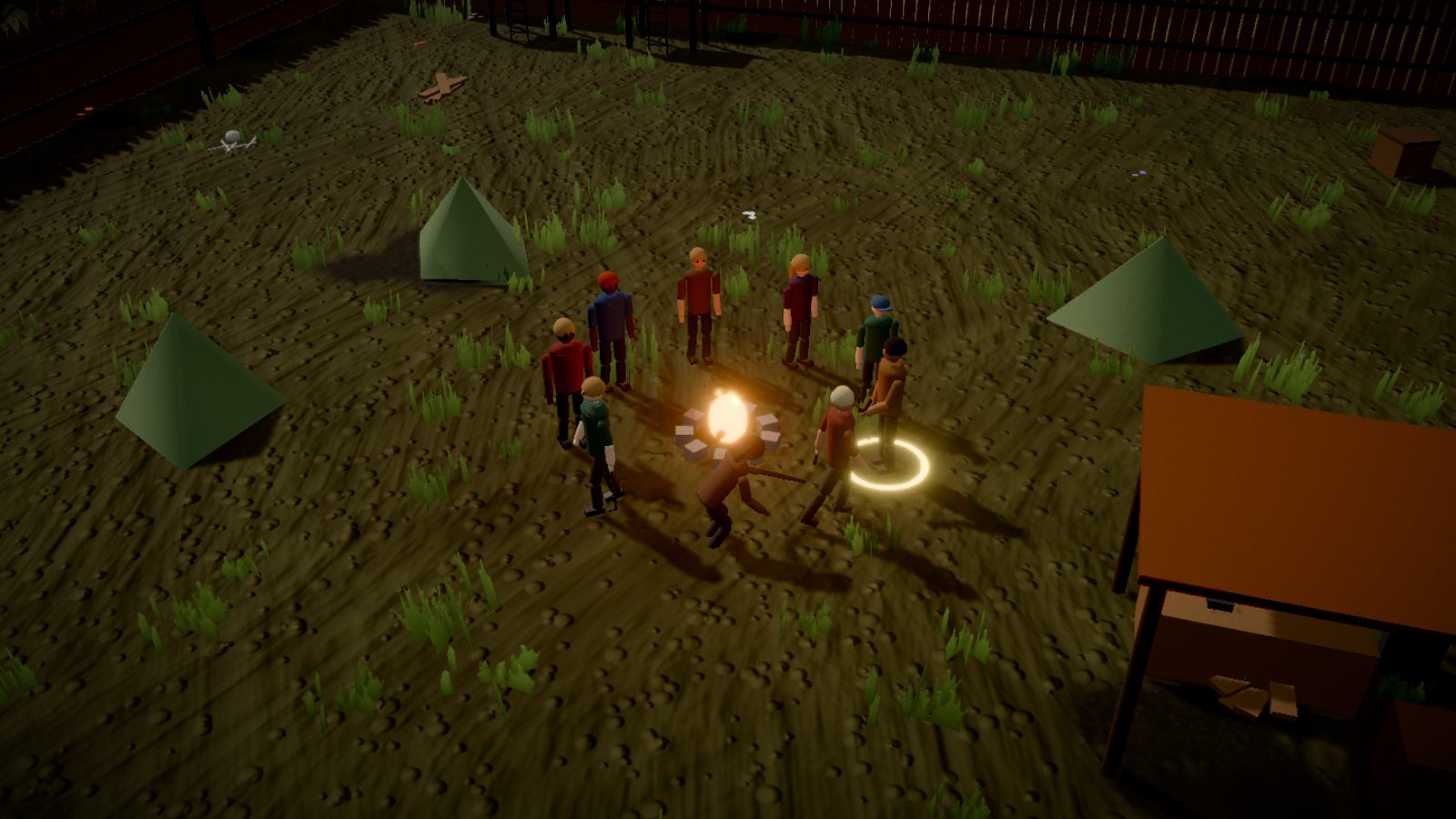 Around the fire · 9 people
Workshop
Around the fire · 9 people
Workshop
01 What makes it different
Holdout is played from above, in real time you can pause. You can fight, but most of what decides a run happens in a meeting, on a map, or in the minutes you spend waiting for someone to come home.
01 Leadership
A thief, a bite, a stranger at the gate: each call is yours or the group's. Deciding builds Authority; a vote builds Trust, and you live with the result. People remember who overruled them.
02 Knowledge
The maps show what your people know, not the world. Every marker says how you know it and how old the news is. Out of radio range, you hear nothing until they walk back in.
03 Missions
Draw the route, pick the team, hand out gear and rules. They really walk it, search real crates and fight the real dead. When they are back, the debrief tells you what happened.
04 The camp
Set each camp's goals in order. The camp moves people to the jobs those goals need, tells you what stands in the way, and proposes goals of its own.
05 The dead
No special infected. Most doze on their feet by day. Herds of a hundred or more cross the valley; you track them from sightings and sounds, go quiet, or turn them aside.
06 People
Life stories with a job, a hometown and family. Secrets that slip out in hints. Friendships and rivalries that change how people work. A bitten hand you can cut away, if you act within the hour.
02 A living world, seen second-hand
Nobody is marked on the map until one of your people finds out about them. Someone out alone tells you when they're back. A herd you only heard is a circle of doubt with no heading. Two walkie-talkies keep you in touch; without them, the camp's deputy decides for you and you get the brief when you return.
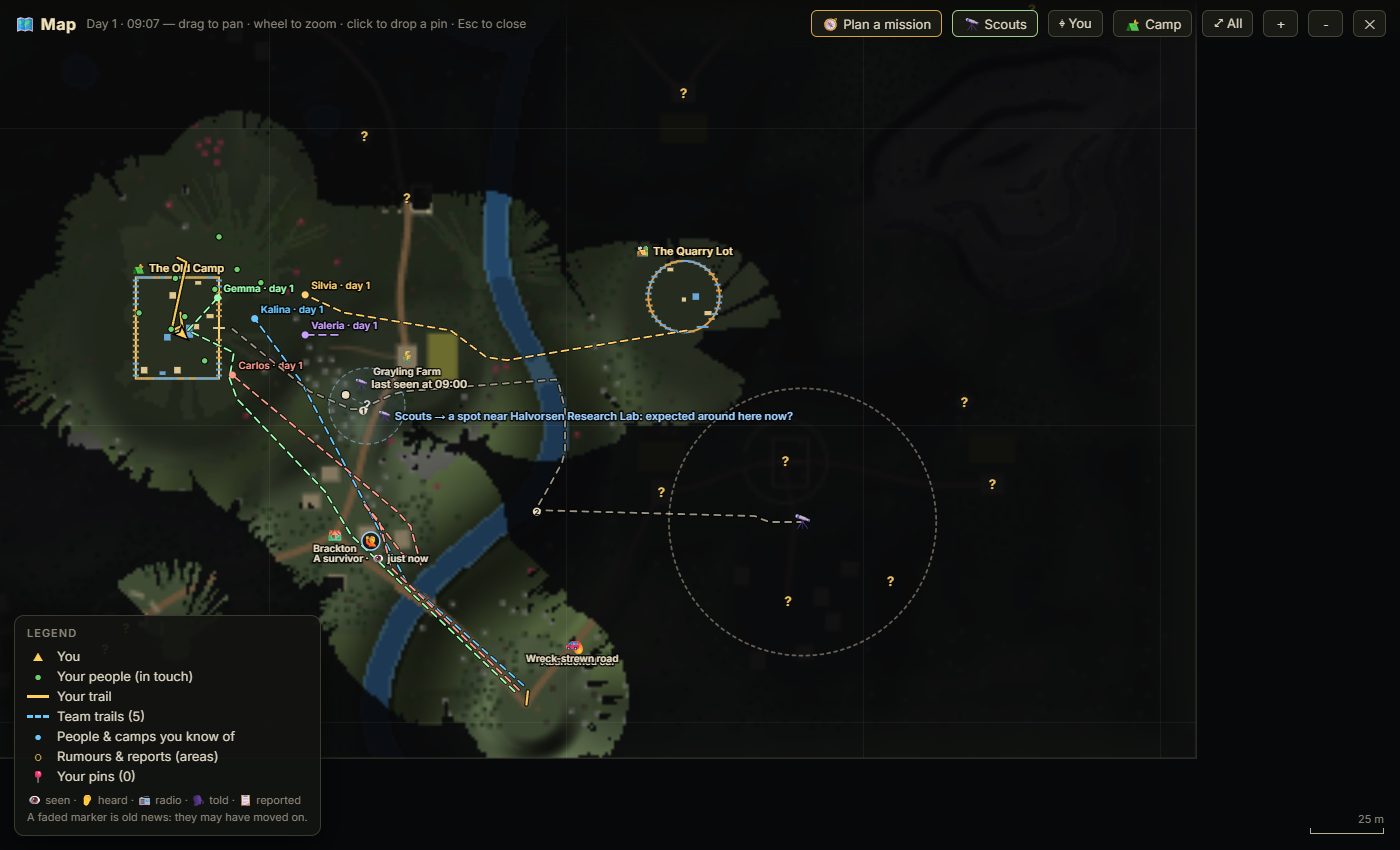 No radio: a guess, not a dot
Their target
No radio: a guess, not a dot
Their target
Heard a herd moving through the lowlands last night. Sounded like rain on a roof.
expected around here now?
03 Around the fire, Day 1
When you claim your first camp, everyone gathers to agree how it will live. Every face shows whether that person would sign as the charter stands, judged from what you know about them. Hidden traits can still surprise you in a real vote.
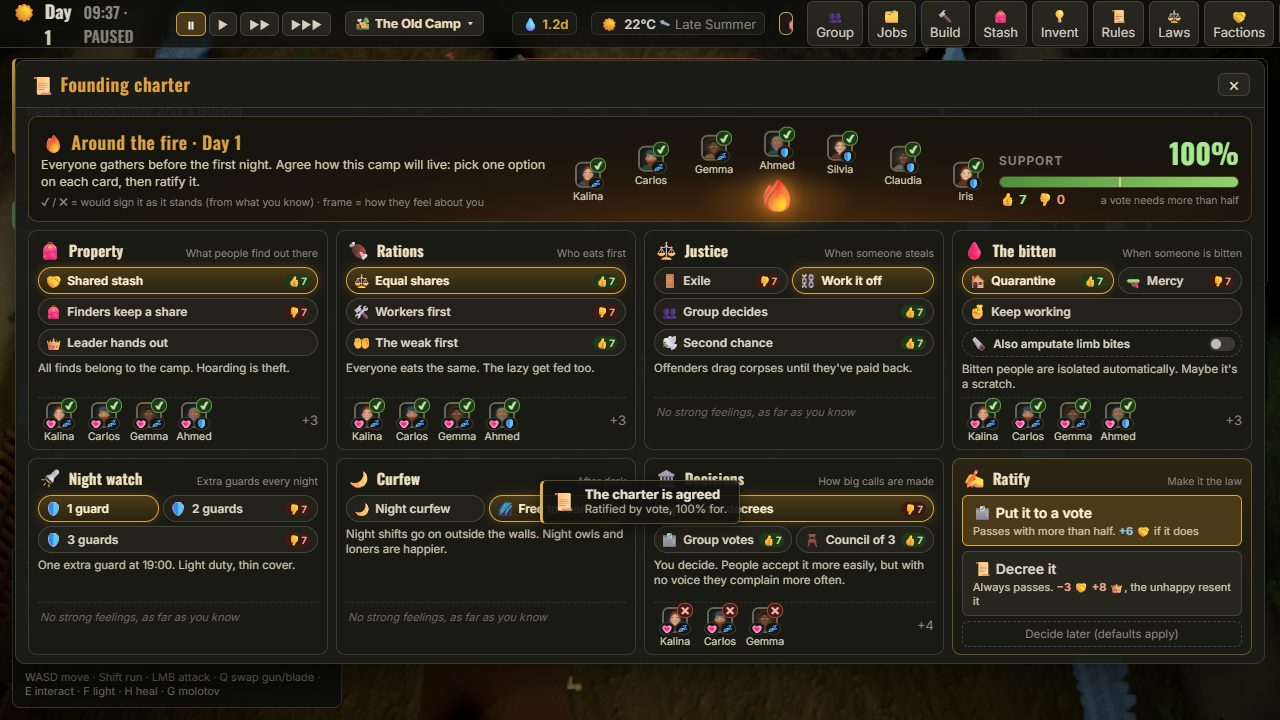
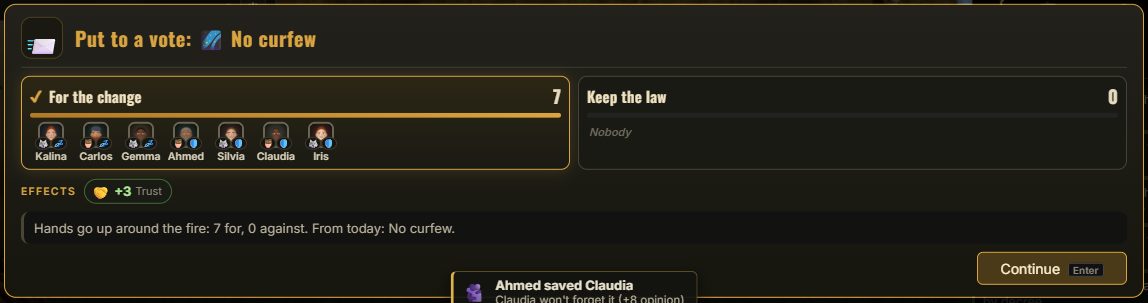
Needs more than half. If it passes, +6 Trust. If it fails, the no-voters say what they dislike.
Always passes. Costs 3–10 Trust, gains 8 Authority, and those who didn't want it remember.
Later, unhappy people petition to change a law, and you grant it, put it to a vote, postpone it or veto it; three vetoes within ten days bring a leadership challenge. Leave a camp and its deputy decides in your place, by their own character, but never exiles or executes anyone.
04 Out of the walls
Scout a place or a route, scavenge, clear, rescue, trade, recruit, run supplies to another camp. The amber line is the way they will really walk, round rivers by the fords and bridges. The planner estimates time and risk from your map, not from the truth.
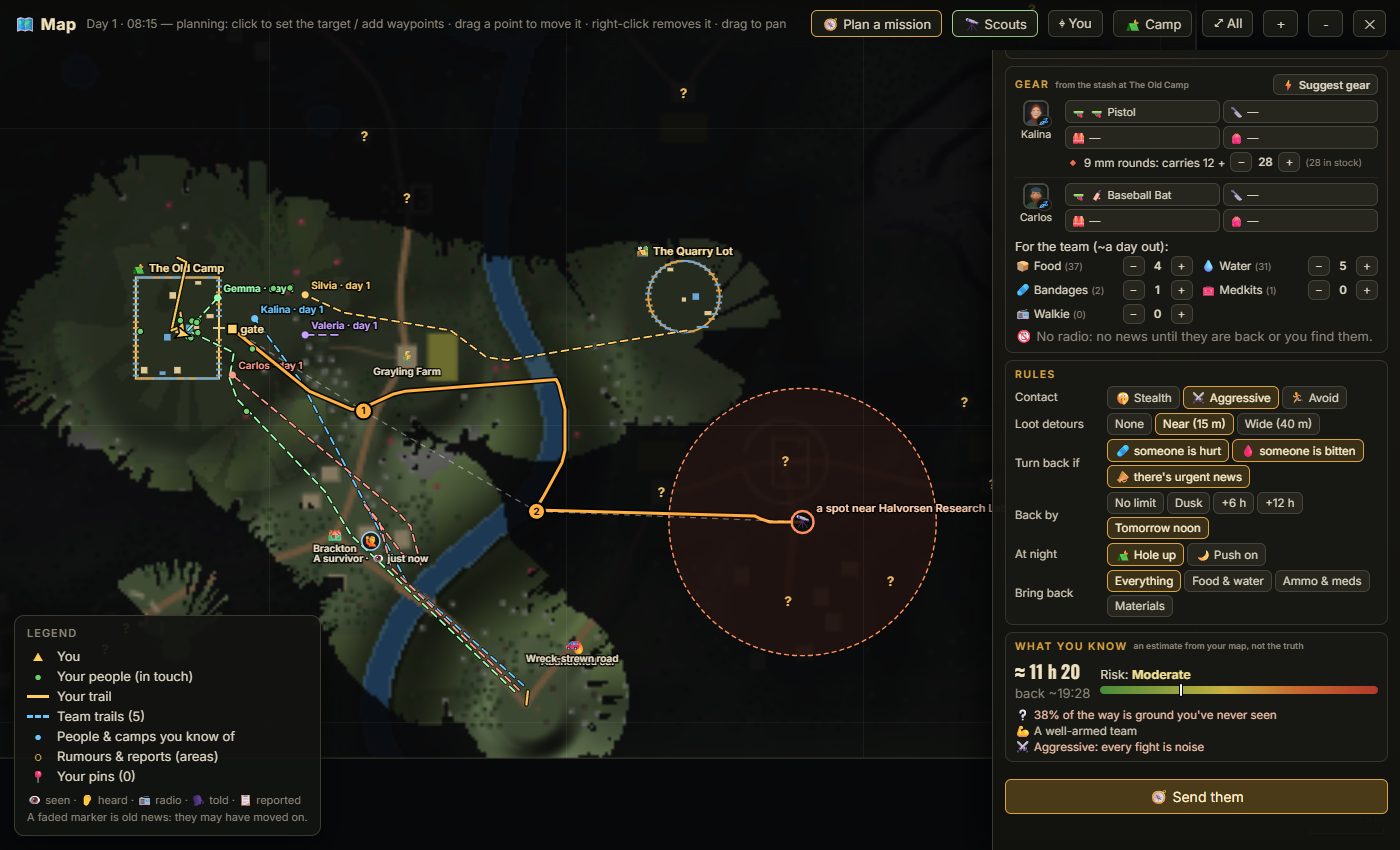 Waypoint 1
Target: 38% unseen ground
Waypoint 1
Target: 38% unseen ground
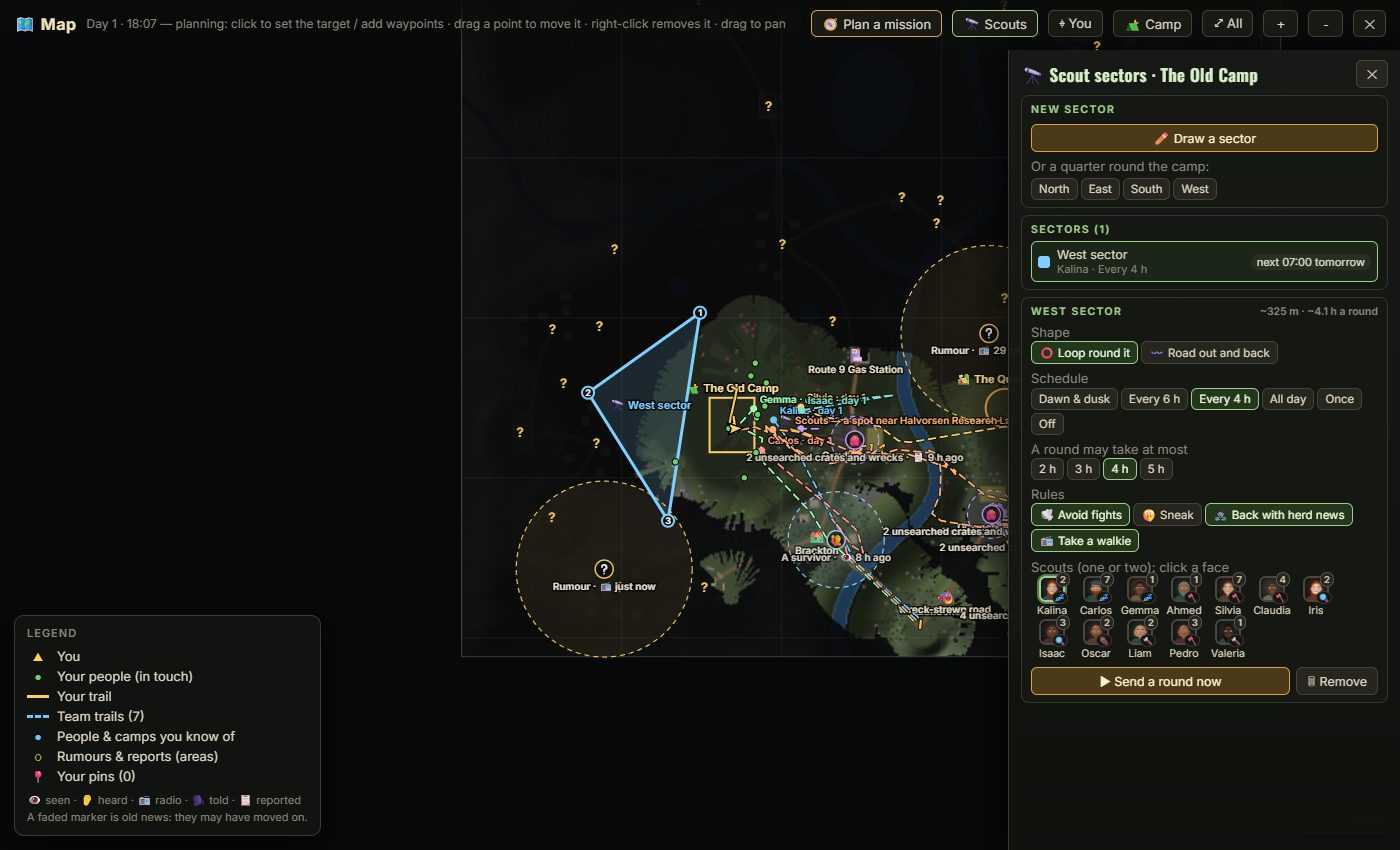
Scouts per sector
Draw a loop or a road for a scout or a pair, set a schedule, and give them rules: avoid fights, sneak, come back with herd news. They report herds, people on the move, groups of the dead and unsearched crates, and only once they are home or on the radio.
05 How a day plays · 12 real minutes at 1×
Pause whenever you need to think; speed up when the walls are holding. A game hour takes 30 real seconds at normal speed.
Night ends. The watch comes off the walls and the game autosaves.
Dawn rounds start. Workers head for the jobs your goals need.
Missions on the road, supply runs between camps, a stranger at the gate.
A hint may surface: the count on the tins is off again.
Two hours of light. Haul the last wood home.
Woodcutters and scavengers walk back to the fire.
In waves, more each night. Every shot calls more.
Each camp feeds its own people from its own food.
Day 2 · 20:00 The first real horde. Close the perimeter by then, or they walk straight in.
06 The systems
Each pressure comes with a way to answer it, found somewhere in the world. The field manual has every number.
07 Plates from the field
Every image on this page is a capture from the game as it is now, in the browser. Select a plate to enlarge it.
Now open · Early access
Holdout is in early access. It runs right here in your browser, with nothing to install. Saves stay in your browser, with an autosave every dawn.
A recent Chrome, Edge or FirefoxDesktop, keyboard and mouse